
Third Party Clinical and State Credentialed Leadership and Staff
Profile: Bobby Tredinnick CEO
Background screening and clinical training are central to Interactive Health's commitment to standardizing adolescent care. The organization holds its transport personnel to the same expectations families would apply to any treatment program a loved one attends. Transport is the first step in an adolescent's movement into a treatment setting, and the professionals conducting it carry a corresponding level of responsibility for the young person's safety and clinical experience. Applying treatment-level standards to screening and training reflects the position that clinical rigor begins with the first contact with the adolescent and family, not at the program's front door.When a family is deciding who will transport their teenager through one of the most difficult moments of their lives, "trust us" is not enough. They need proof. They need names, institutions, and credentials that exist independently of the company doing the asking.
That is precisely the standard Interactive Youth Transport holds itself to. The agency is led by Bobby Tredinnick, LMSW-CASAC, whose clinical qualifications were not granted by IYT and cannot be revoked by IYT. They were earned through years of work across some of the most demanding clinical environments in the country, verified by licensing boards, conferred by academic institutions, and recognized by national nonprofit organizations dedicated to ending the addiction crisis.
The question families should ask any transport provider is not "what do you say about yourself?" It is "who else will vouch for you?" For IYT, the answer to that question spans New York University, Weill Cornell Medical College, the New York State Office of Addiction Services and Supports, and Shatterproof, one of the most respected addiction advocacy organizations in the United States.
While there are many forms of training, sometimes Institutional Accredidation is important, for adolescent transport given its mixed history we believe that foundations education in a clinical degree program should be a part of the oversight, while also aknwledging the incredible talent that many individuals give off naturally or through experience.
What "Licensed" Actually Means in Clinical Social Work
Not every person working in behavioral health transport holds a license. Many do not. The distinction matters enormously, and it is one that most families do not know to ask about.
Bobby Tredinnick holds two independently verified clinical credentials:
LMSW (Licensed Master Social Worker): Issued by the New York State Education Department, this license requires a master's degree in social work from an accredited program, completion of supervised post-graduate clinical hours, and passage of a national licensing examination administered by the Association of Social Work Boards. The license is renewable and subject to ongoing continuing education requirements. It can be verified by any member of the public through the New York State license lookup database.
CASAC (Credentialed Alcoholism and Substance Abuse Counselor): Issued by the New York State Office of Addiction Services and Supports (OASAS), the CASAC credential requires documented supervised hours across the full continuum of substance use disorder care, including prevention, treatment, and recovery. It is one of the most rigorous substance use disorder credentials in the country and is not self-awarded.
Together, these credentials mean that Bobby's clinical standing has been evaluated and approved by two separate New York State agencies. Neither the LMSW nor the CASAC was issued because he started a company. They were issued because external evaluators determined he met the standard.
Why this matters for families: A license is a public record. If a provider's clinical leadership cannot point to a verifiable, state-issued license, the claim of "clinical oversight" is marketing language, not a regulated standard.
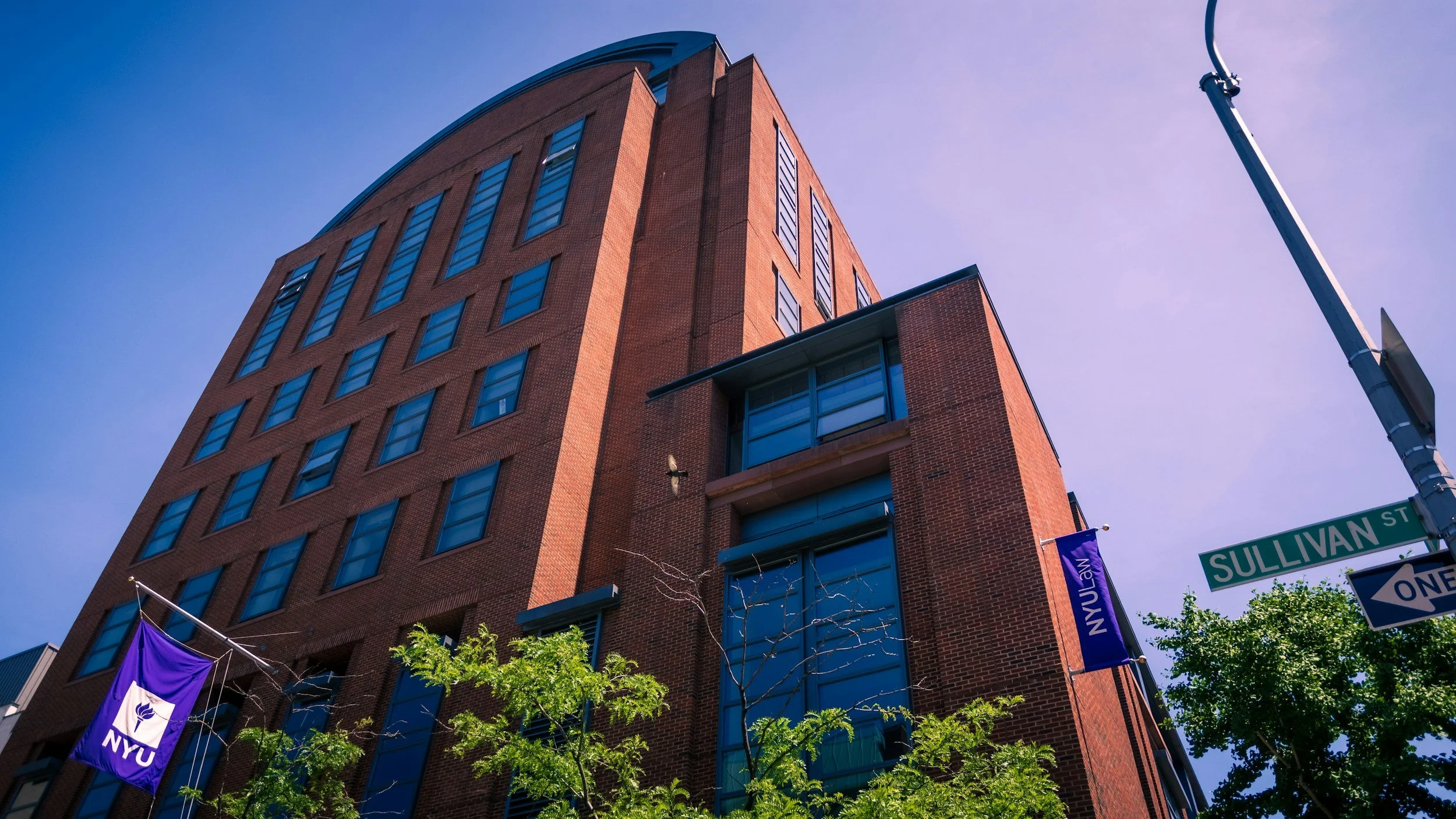
Bobby's master's degree in clinical social work was earned at New York University, one of the country's leading programs for training clinical practitioners. NYU's social work program consistently ranks among the top in the nation, and its graduates are trained in evidence-based practice, ethics, and complex case management across populations. The academic foundation behind the license is not a weekend certificate; it is a graduate-level clinical education.
Weill Cornell Medical College: Clinical Experience at an Academic Medical Center
Clinical experience is not interchangeable. Working within an academic medical center environment is a fundamentally different level of professional exposure than working in a standalone outpatient office. Weill Cornell Medical College is one of the premier academic medical institutions in the United States, affiliated with NewYork-Presbyterian Hospital and consistently ranked among the top medical schools in the country.
Bobby Tredinnick's professional background includes clinical work connected to Weill Cornell Medical College. This kind of institutional affiliation carries weight precisely because academic medical centers maintain rigorous standards for who works within their clinical systems. They conduct background checks, credential verifications, and ongoing supervision. Affiliation is not automatic; it is earned and maintained.
What Academic Medical Center Experience Signals
Working in or alongside an academic medical center environment exposes clinicians to:
Complex, high-acuity cases that community settings rarely encounter
Interdisciplinary collaboration with physicians, psychiatrists, nurses, and specialists
Structured clinical supervision and peer review processes
Evidence-based protocols developed and updated by researchers and practitioners simultaneously
Diverse patient populations, spanning age, diagnosis, acuity, and socioeconomic background
This breadth of exposure is directly relevant to adolescent transport. The teenagers IYT serves are often in acute crisis, with co-occurring mental health and substance use presentations. Managing those situations safely requires a clinical foundation built across populations and settings, not just within a single specialty lane.
The real-world implication: A clinician shaped by an academic medical center environment approaches a transport assignment with a different clinical vocabulary than someone trained exclusively in a single-modality outpatient program. That difference shows up in how a crisis is recognized, how de-escalation is applied, and how the handoff to a treatment team is managed.
Shatterproof Junior Board Chair: Recognized by the Nation's Leading Addiction Advocacy Organization
Shatterproof is a national nonprofit founded in 2013 with a singular mission: to end the devastation that addiction causes American families. It is not a trade association with membership fees. It is a science-driven advocacy organization focused on closing the treatment gap, improving care quality, reducing stigma, and driving federal and state policy reform. Its board includes leaders from major universities, investment firms, and public health institutions.
Bobby Tredinnick served as Junior Board Chair of Shatterproof. This is not a ceremonial title. Junior board leadership at a national nonprofit of Shatterproof's stature requires demonstrated commitment to the organization's mission, active participation in governance and fundraising, and credibility within the addiction and behavioral health field. Organizations like Shatterproof do not extend board-level roles to individuals whose professional conduct or clinical standing is in question.
Why This Credential Is Different from the Others
Licenses and degrees are granted by regulatory bodies and academic institutions based on examination and supervised hours. A nonprofit board role is granted based on peer recognition, professional reputation, and alignment with organizational values. It is, in the most literal sense, a third party saying: this person is someone we trust to represent our mission.
For families evaluating adolescent transport providers, the Shatterproof connection answers a specific question: does the clinical leadership of this company have standing in the broader addiction and behavioral health community, beyond the company itself? The answer, in Bobby's case, is yes, and it was validated by one of the most credible organizations working on addiction in the United States.
Shatterproof's mission is "to create a Shatterproof world, where addiction never defines or ends a life, by transforming systems for tomorrow, supporting families today, and ending stigma forever." Aligning with that mission at the board level is a statement of professional values, not just a line on a resume.
Cross-Population Clinical Practice: Why Working with All Age Groups Matters
One of the more overlooked dimensions of clinical credibility is population breadth. A clinician who has only ever worked with adolescents in residential settings has a narrower clinical frame than one who has worked with children, teenagers, adults, and older adults across multiple treatment modalities. Bobby Tredinnick's clinical career spans all age groups.
This matters for adolescent transport specifically because teenagers in crisis do not present in a vacuum. They arrive with family systems, attachment histories, trauma backgrounds, and sometimes co-occurring adult-onset presentations that require a clinician to draw on knowledge built across the lifespan. A transport professional who has only ever worked with one population is working from a narrower map.
For referring clinicians and treatment programs: When an admissions team sends a client with IYT, they are not handing that client to a specialist with one tool. They are handing them to a clinician whose frame of reference was built across the full range of human behavioral health presentations.
New York State Naloxone Instructor Certification: A State-Authorized Teaching Credential
Naloxone (Narcan) saves lives. It reverses opioid overdoses within minutes and is now a frontline emergency tool carried by first responders, clinicians, and trained community members across the country. Knowing how to administer it is one thing. Being authorized by the State of New York to certify others in its use is something categorically different.
Tredinnick also holds instructor-level authorization to train individuals in naloxone administration under New York State's opioid overdose prevention framework, and provided under Weill Cornell Midtown Center for Treatment and Research. This authorization is governed by the New York State Department of Health and the New York State Office of Addiction Services and Supports (OASAS).
What the State Requires to Become a Naloxone Instructor
New York State does not allow anyone to simply declare themselves a naloxone trainer. The NYSDOH and OASAS framework requires that trainers:
Be vetted and approved by a registered Opioid Overdose Prevention Program (OOPP)
Demonstrate mastery of the overdose prevention curriculum used by the registered program
Be supervised by a clinical director or affiliated prescriber before independently training others
Issue state-standardized certificates of completion to individuals they certify
Maintain records subject to audit by OASAS
For OASAS-certified Education and Training Providers, instructor eligibility requires a minimum of two years of documented teaching or training delivery, demonstrated subject matter expertise, and verification of all professional licenses by the OASAS Learning and Development Unit.
The significance of holding this credential: Interactive Youth Transport’s staff are all certified in Naloxone training and utilization on day one, and as a practice, most carry some on them at all times. This training also authorizes Interactive Staff through New York State to train and certify others. That authorization was granted by a state agency after a vetting process, not by IYT. The certificates he issues to individuals who complete his training carry the authority of the state's opioid overdose prevention infrastructure.
For families whose teenagers may be transitioning out of substance use treatment, this is not a peripheral credential. It is evidence that the person leading their child's transport have this baseline yet invaluable and lifesaving intervention for opioid overdoses. It has been the. single most valuable intervention towards saving lives of those in an overdose.
The Credential Stack: What It Looks Like When Validation Is Independent
It is worth stepping back and looking at the full picture as a single, coherent body of evidence. Each credential listed below was issued, conferred, or recognized by an entity that has no financial relationship with Interactive Youth Transport and no incentive to inflate Bobby Tredinnick's qualifications.
-
Master’s Degree from New York University, Academic degree from a graduate program that typically falls between the 5th and 10th highest ranked school for social work depending on the publishing company.
-
Weill Cornell Medical College; Midtown Center for Treatment and Research located in Midtown Manhattan, where NYU’s graduate program requires two years, whereas most other programs require one. Tredinnick did his first year at NADAP, or the National Association of Drug Abuse Policies, in Brooklyn, NY.
-
Shatterproof is a national nonprofit organization founded in 2013 by Gary Mendell dedicated to reversing the addiction crisis, transforming the U.S. addiction treatment system, and eliminating the stigma surrounding substance use disorders
-
New York State DOH / OASAS State-authorized teaching credential given through Weill Cornell Medical College Practicum.
What Families and Referring Clinicians Should Take From This
The adolescent transport industry is largely unregulated at the federal level. That regulatory gap means that the burden of vetting falls entirely on families and the professionals who advise them. In the absence of a federal licensing standard for transport providers, the only reliable signal of clinical legitimacy is the depth and independence of the credentials held by the people actually doing the work.
IYT's clinical leadership clears that bar in ways that can be verified independently, without taking the company's word for it. That is not a minor distinction. It is the entire point.
If you are a family navigating a crisis, a therapist coordinating a placement, or an admissions director evaluating a transport partner, the right question is not whether a company sounds credible. It is whether their clinical leadership has been credentialed by institutions that answer to someone other than themselves. At Interactive Youth Transport, the answer is yes, and the receipts are public.
Schedule a free consultation with IYT to discuss your family's situation and learn more about how clinical oversight shapes every transport from the first call to the final handoff.
