

Interactive Blog And Thought Collective
In-depth insights, research, and practical guidance on youth inpatient transitions and quality of care
What Can You Expect from Interactive Youth Transport and Our New Blog?
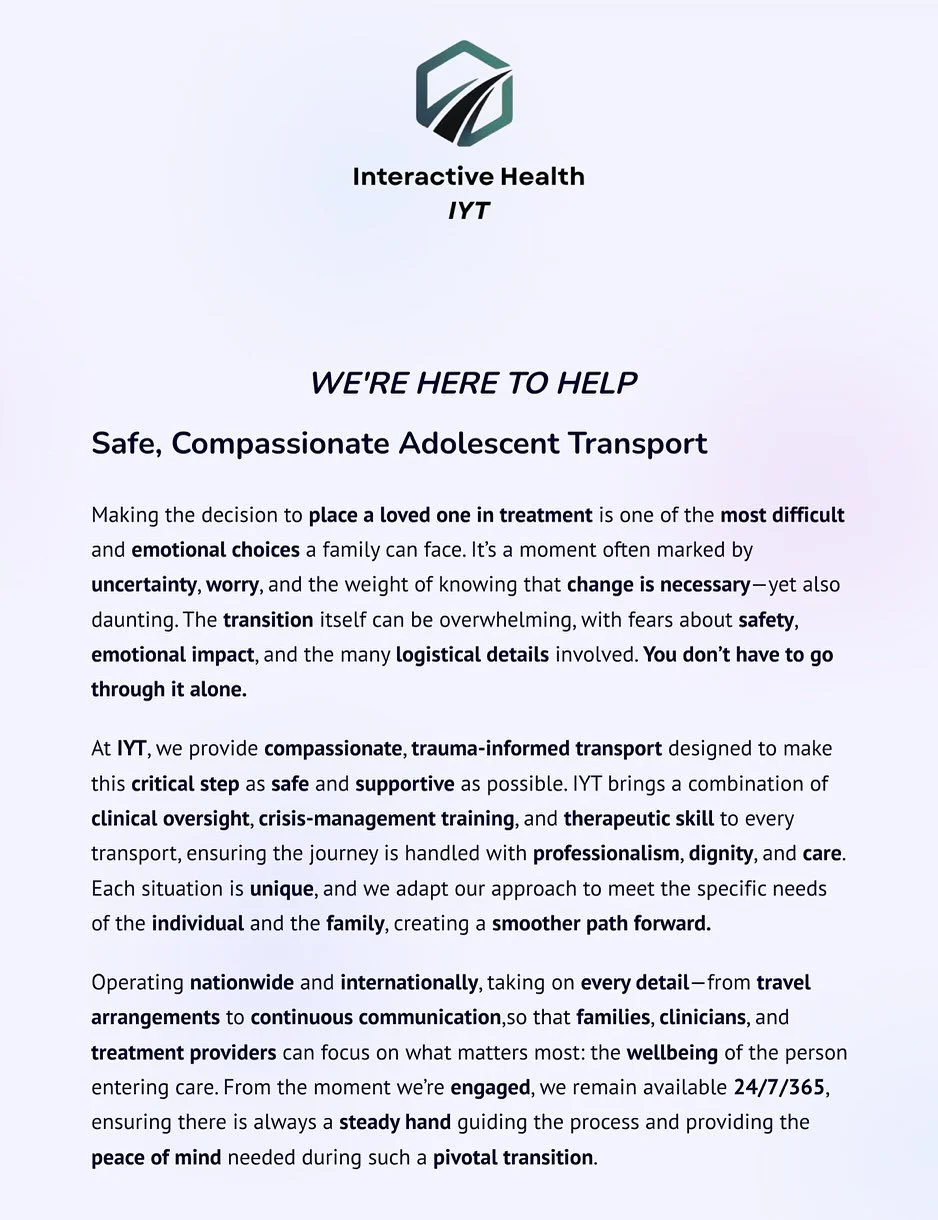
Comprehensive Parent’s Guide to Transport to Treatment
Recognize the moment. Plan precisely. Get there safely.
Hello Everyone, Thank you for visiting our blog and thought exchange. We are excited to begin sharing more about ourselves and exploring new ideas in Teen Treatment and quality care
We Wil be featuring among other topics:
"Asked and Answered Series": We’ll answer questions from all of you—about teen transport, the behavioral health field, and everything in between. Let’s start the conversation!
Tackling the Tough Conversations: Addressing the hard topics that need attention.
The Future of Adolescent Care: Exploring innovation and the next phase of healing.
Guides and Expert Advice: Insights from our top clinical staff and contributing experts in the field.
We can't wait to take this journey with you!
Everyone is welcome! Whether you're a therapist, parent, treatment center, or adolescent, we encourage the submission of your questions, topics of interest, and thought-provoking op-ed requests. What would you like to know more about?
Email us at: Info@InteractiveYouthTransport.com

Role of Mental Health Experts in Youth Transport
In the high-stakes world of youth transport, where vulnerable adolescents navigate crises from juvenile detention to treatment centers, a single oversight can escalate into tragedy. Statistics reveal that up to 70 percent of youth in these systems grapple with untreated mental health issues, turning routine transfers into potential flashpoints for decompensation or self-harm. This reality underscores a critical yet often overlooked truth: the indispensable role of the mental health expert in ensuring safe, effective transport.

How Transport Agents Use Calm Energy to De-Escalate Adolescent Behavioral Health Crises
Transport agents don't manage adolescent crises through authority alone. They manage them through their nervous system. When an agent stays calm, the adolescent's brain detects that signal and begins to mirror it — through emotional contagion, mirror neurons, and polyvagal responses that operate before conscious thought. This article breaks down the neuroscience behind energy signaling, why it works, and what separates clinical transport from basic escort services.

Why Clinical Oversight in Adolescent Mental Health Transport Determines Treatment Success
Emergency mental health transport for adolescents sits at a dangerous blind spot in the care continuum: while enormous resources go toward crisis stabilization and eventual treatment, the transport phase itself is frequently dismissed as mere movement from point A to B. The reality is far more consequential. This interim period represents a make-or-break clinical window where the approach taken directly influences a teen's neurobiological state, trust in helpers, engagement readiness, and ultimate treatment success.
Traditional services treat transport as a security challenge, employing intimidation, surprise arrivals, and physical control—tactics that flood the adolescent brain with cortisol, activate fight-or-flight responses, and create lasting patterns of resistance to authority and medical environments. In contrast, clinical transport applies the same evidence-based, trauma-informed standards used throughout behavioral health: licensed staff use measured de-escalation, non-threatening communication, choice-within-boundaries, and motivational techniques to calm the stress response and foster connection.
The stakes are high—demand for youth behavioral health services surges while supply lags, creating bottlenecks and repeated transitions. Failed transport undoes emergency department progress, extends stabilization time at facilities (driving up costs from $10K–$60K/month), and erodes family trust. When done right, clinical oversight ensures safer arrivals, smoother intakes, stronger therapeutic alliances, and measurable improvements in long-term participation and recovery.

Identifying Innovation in Adolescent Care: Transport, and Private Care Options, How Families Navigate an Opaque Area of Behavioral Health
Adolescent transport sits in a complicated space. Public opinion about the field often reflects past actors and outdated practices, creating a narrative that overshadows current realities. Yet for families facing acute behavioral health crises, transport remains an absolutely necessary service within the broader continuum of care. The challenge families face is navigating an opaque field to identify which providers are actually leading through innovation, clinical sophistication, and forward-thinking approaches. How do families distinguish between providers stuck in old models and those actively advancing adolescent care? This comprehensive guide reveals what families should look for when evaluating adolescent transport, case management, and private care options—including specific questions to ask, red flags to watch for, and how to trust your instinct alongside objective criteria.

Rethinking Crisis Intervention: Clinical Windows and Missed Opportunities in Adolescent Behavioral Health
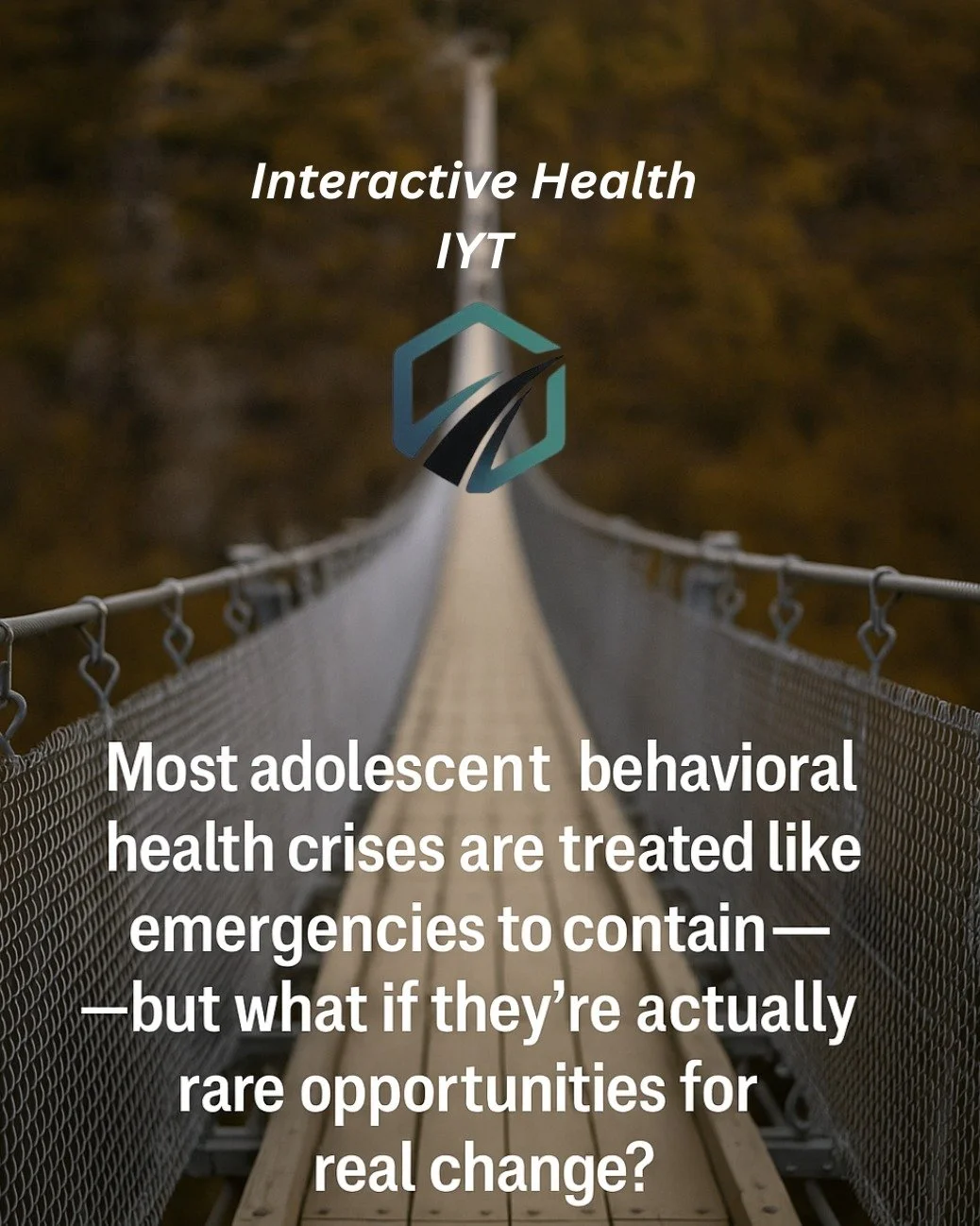
Adolescent behavioral health crises are often seen as problems to contain, but the reality is far more complex. During these moments, the adolescent brain is uniquely open to change—offering a rare clinical window for meaningful intervention. This article explores the neurobiology behind crisis response, why traditional approaches fall short, and how genuine, evidence based strategies can turn crisis into the turning point for lasting growth and accountability.
INSTAGRAM: @INTERACTIVEHEALTHCO














The Wet Clay State: Post-Treatment Choices and the Future They Create
Your short teaser here...
Read more →Interactive Approaches to the Navigation of Cannabis-Induced Psychosis
Your short teaser here...
Read more →
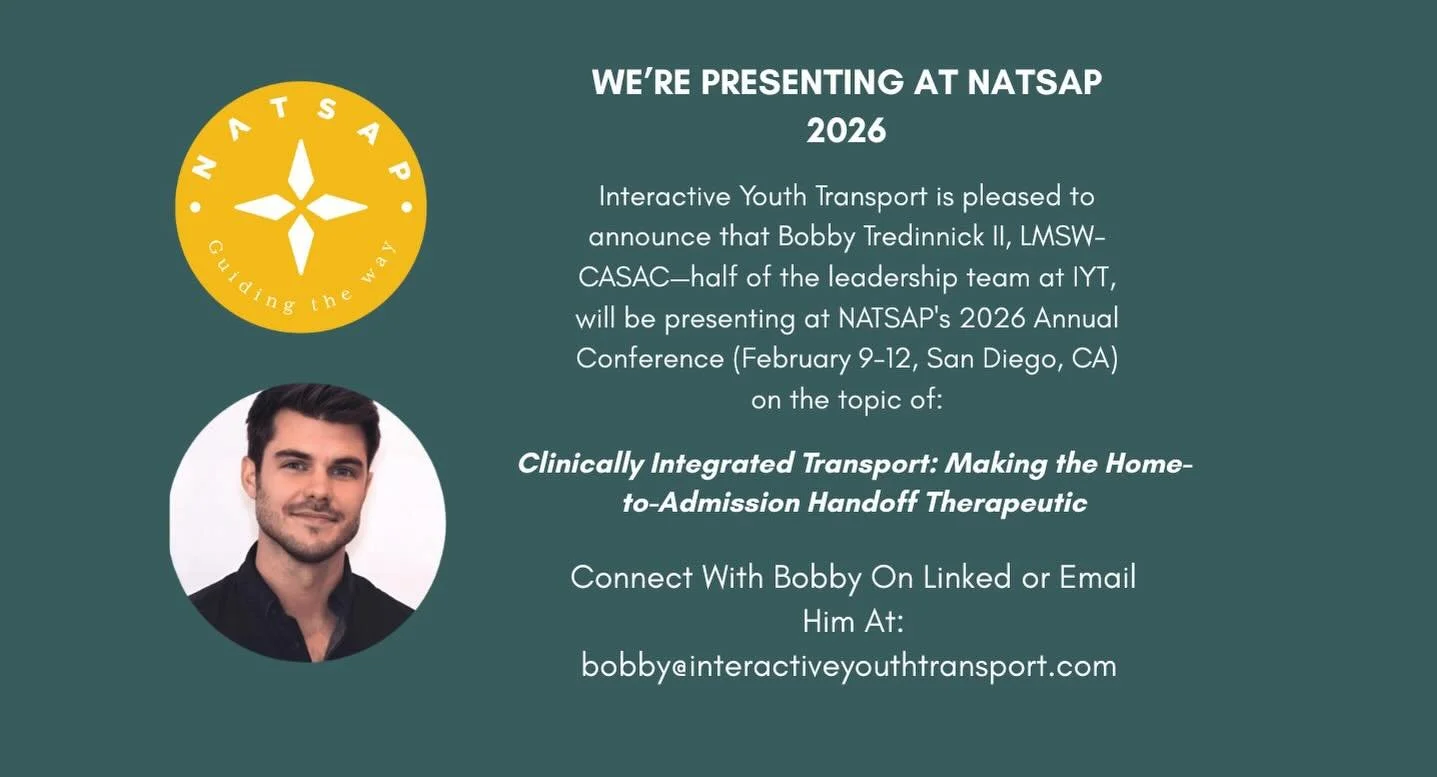
Bobby Tredinnick is the author of the blog posts on Interactive Health (Interactive Youth Transports) page. He believes in the triage between clinical training and education, lived experience, and being grounded in a desire to help, as well as the humility that allows clients to feel supported enough to be the instigator of their own transformation. Bobby has been working with clients for over 10 years and also seeks out opportunities to expand new models of care and the integration of technology and investment in ways that produce sustainable care models in accessible formats.