

Interactive Blog And Thought Collective
In-depth insights, research, and practical guidance on youth inpatient transitions and quality of care
What Can You Expect from Interactive Youth Transport and Our New Blog?
Comprehensive Parent’s Guide to Transport to Treatment
Recognize the moment. Plan precisely. Get there safely.
Hello Everyone, Thank you for visiting our blog and thought exchange. We are excited to begin sharing more about ourselves and exploring new ideas in Teen Treatment and quality care
We Wil be featuring among other topics:
"Asked and Answered Series": We’ll answer questions from all of you—about teen transport, the behavioral health field, and everything in between. Let’s start the conversation!
Tackling the Tough Conversations: Addressing the hard topics that need attention.
The Future of Adolescent Care: Exploring innovation and the next phase of healing.
Guides and Expert Advice: Insights from our top clinical staff and contributing experts in the field.
We can't wait to take this journey with you!
Everyone is welcome! Whether you're a therapist, parent, treatment center, or adolescent, we encourage the submission of your questions, topics of interest, and thought-provoking op-ed requests. What would you like to know more about?
Email us at: Info@InteractiveYouthTransport.com

A Parents Guide About Crisis Intervention and Transport Using Evidence-Based Frameworks
When a teenager spirals into crisis — defiance, self-harm, substance use, violence — most parents don't recognize what they're actually seeing: untreated depression, trauma, or a substance use disorder that has crossed into clinical territory. The difference between a behavioral problem and a mental health emergency isn't always obvious, but it determines everything about how you respond.
This guide draws on evidence-based clinical frameworks to help parents understand what's driving their teen's behavior, how to evaluate treatment options, and what crisis intervention actually looks like when it's done right. You'll learn how to distinguish normal adolescent boundary-testing from symptoms requiring professional intervention, what questions to ask when evaluating residential programs, and how therapeutic transport differs from the punitive "escort service" model that has caused documented harm to teens.
With 80% of adolescents with depression receiving no treatment, the gap between crisis and care is wide — and navigating it without clinical guidance puts families at serious risk of making decisions that worsen outcomes. This is what you need to know before you make that call.

Clinically Integrated Transport - The Liminal States in the Youth Involuntary Transport
Clinically Integrated Adolescent Transport reframes teen transport services and involuntary youth transport away from the historical “goon squad” model and toward a clinically grounded, trauma informed approach. Rather than viewing adolescent transport services as logistics, this framework identifies therapeutic transport as a unique clinical inflection point within the behavioral health continuum of care, a psychological threshold that does not exist at any other stage of residential treatment entry.
During adolescent therapeutic transport, teens are separated from entrenched home dynamics and peer reinforcement patterns, creating a rare window of psychological malleability. When approached with clinical intentionality, crisis transport becomes an opportunity to establish a productive therapeutic relationship and begin decoupling baked in home behaviors before peer group dynamics re form within residential treatment programs.
How a teen enters mental health treatment through youth transport meaningfully shapes how they engage in the care that follows.

Identifying Innovation in Adolescent Care: Transport, and Private Care Options, How Families Navigate an Opaque Area of Behavioral Health
Adolescent transport sits in a complicated space. Public opinion about the field often reflects past actors and outdated practices, creating a narrative that overshadows current realities. Yet for families facing acute behavioral health crises, transport remains an absolutely necessary service within the broader continuum of care. The challenge families face is navigating an opaque field to identify which providers are actually leading through innovation, clinical sophistication, and forward-thinking approaches. How do families distinguish between providers stuck in old models and those actively advancing adolescent care? This comprehensive guide reveals what families should look for when evaluating adolescent transport, case management, and private care options—including specific questions to ask, red flags to watch for, and how to trust your instinct alongside objective criteria.

INTERACTIVE INSIGHTS - THE WET CLAY STATE
Treatment isn't a cure. It's a foundation. The 30 to 90 days your child spends in inpatient care allows the brain to heal to baseline, but that baseline is raw and vulnerable. This is the wet clay state, where consistent aftercare and the right relationships determine whether change solidifies or slips away. Research shows adolescents who receive aftercare are 75% less likely to require re-hospitalization, while those who transition without support see only a 6% success rate.

SUPPORTING YOUR TEEN THROUGH A BEHAVIORAL HEALTH CRISIS
There's a clear line between typical teenage turbulence and something far more serious. A behavioral crisis happens when a teen's actions create genuine risk to themselves or others, or when their ability to cope has completely collapsed. This guide provides evidence-based intervention strategies for parents navigating these critical moments.
INSTAGRAM: @INTERACTIVEHEALTHCO






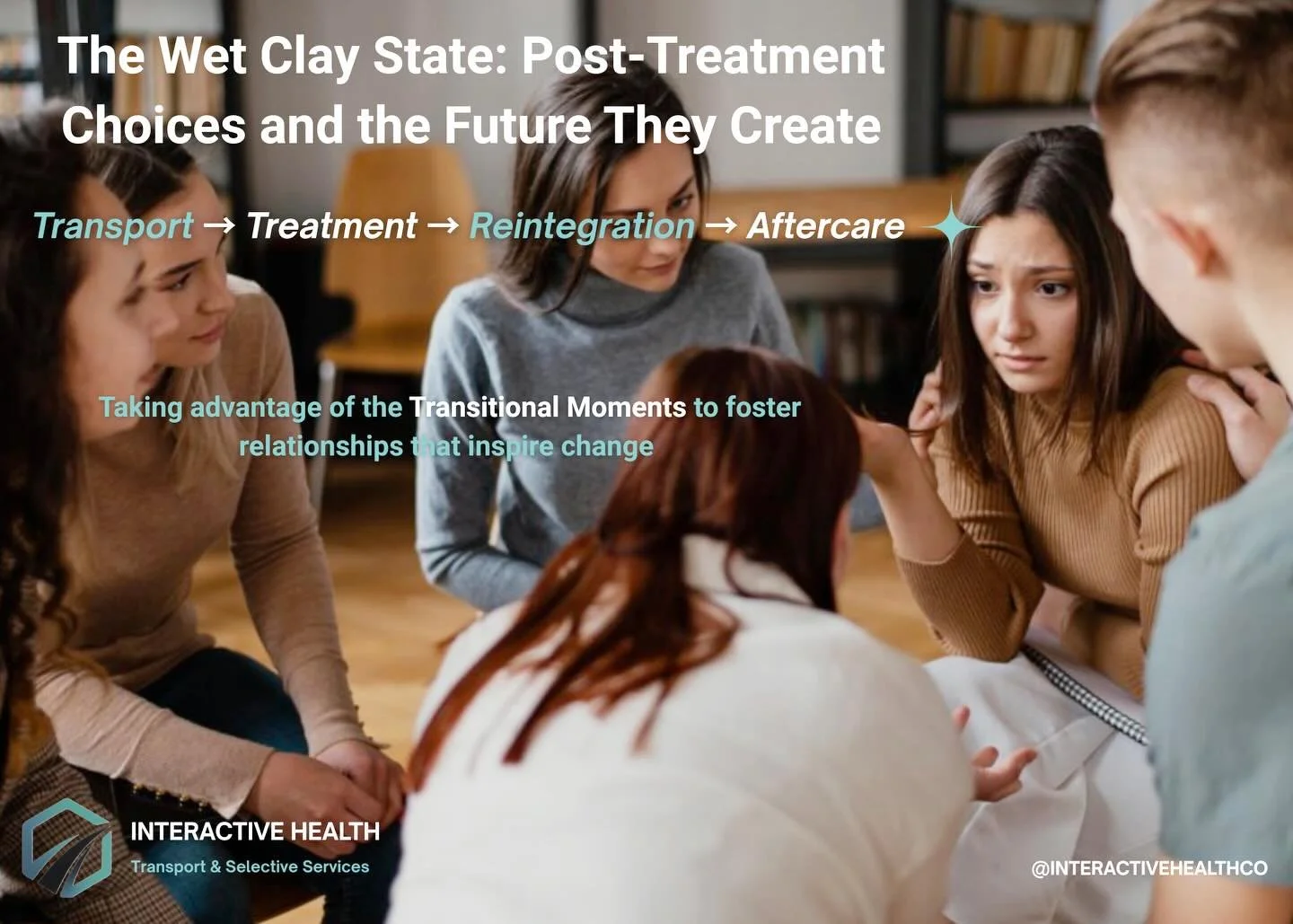







The Wet Clay State: Post-Treatment Choices and the Future They Create
Your short teaser here...
Read more →Interactive Approaches to the Navigation of Cannabis-Induced Psychosis
Your short teaser here...
Read more →
Bobby Tredinnick is the author of the blog posts on Interactive Health (Interactive Youth Transports) page. He believes in the triage between clinical training and education, lived experience, and being grounded in a desire to help, as well as the humility that allows clients to feel supported enough to be the instigator of their own transformation. Bobby has been working with clients for over 10 years and also seeks out opportunities to expand new models of care and the integration of technology and investment in ways that produce sustainable care models in accessible formats.